
Thermal expansion
Polymers expand more than metals and hold cutting heat. Control: lower speeds, sharp tools, air or light coolant where the grade allows, and metrology after shop temperature returns.
Use engineering plastics for wear, sealing, insulation, or high-temperature duty where metal is the wrong starting point. Start with POM, PTFE, or PEEK, then confirm grade, fillers, and environment in DFM.
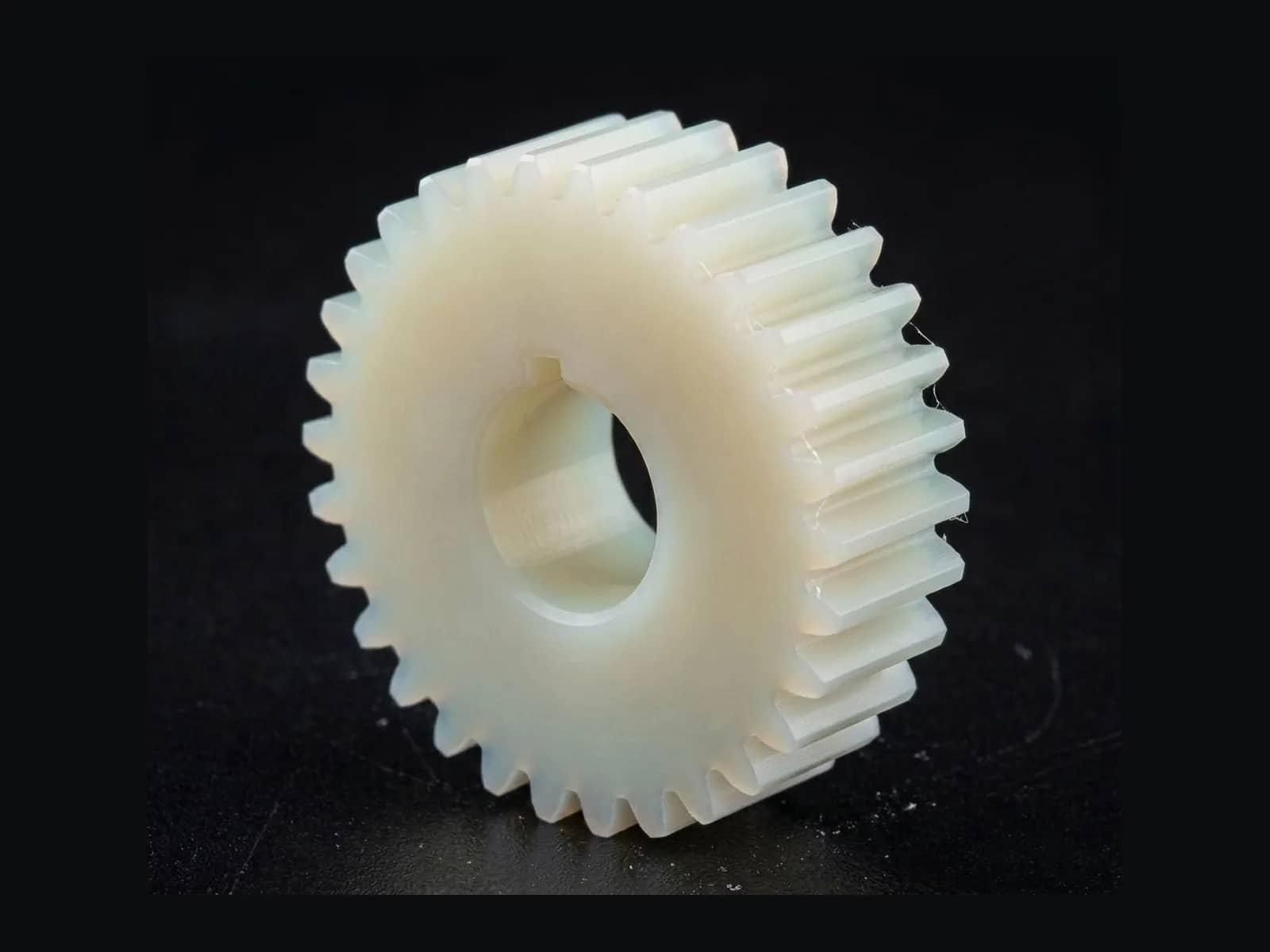
Choose engineering plastics when the part must stay light, electrically isolating, chemically inert, or self-lubricating. Typical work includes POM fittings, PTFE housings, and PEEK flanged sleeves — not a single substitute for metal.
Start with POM / acetal for stiff, stable wear parts, PTFE for low-friction seals, and PEEK when temperature, wear, and isolation coincide. PPS and Nylon PA6 / PA66 belong in the selection table; acrylic and other polymers are quoted only after review of grade, transparency, stock, and geometry.
Thermal expansion, clamp crush, moisture uptake (especially nylon), and micro-burrs drive the process plan. Typical feature tolerance is about ±0.05 mm — not the ±0.10 mm metal default — with tighter limits confirmed via DFM.
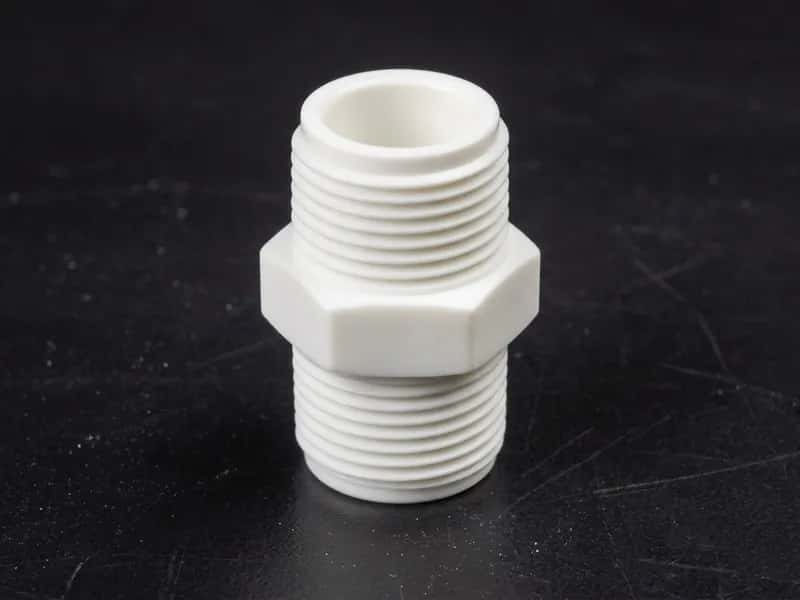
Stiff, dimensionally stable, low moisture uptake for fittings, bushings, and automation wear parts. Clean chip control and good hold near ±0.05 mm on rigid features.
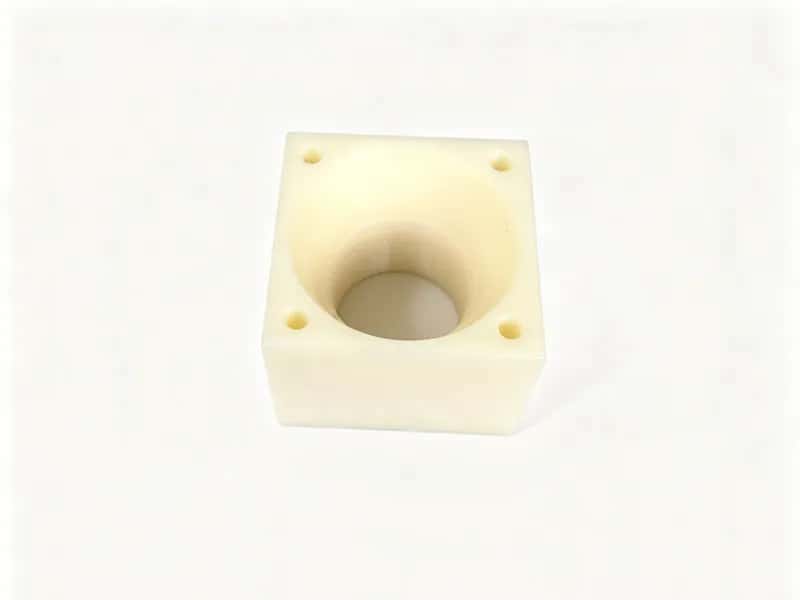
Near-zero friction and chemical inertness for housings, seals, and insulators. Soft stock needs sharp tools and gentle workholding to avoid crush.
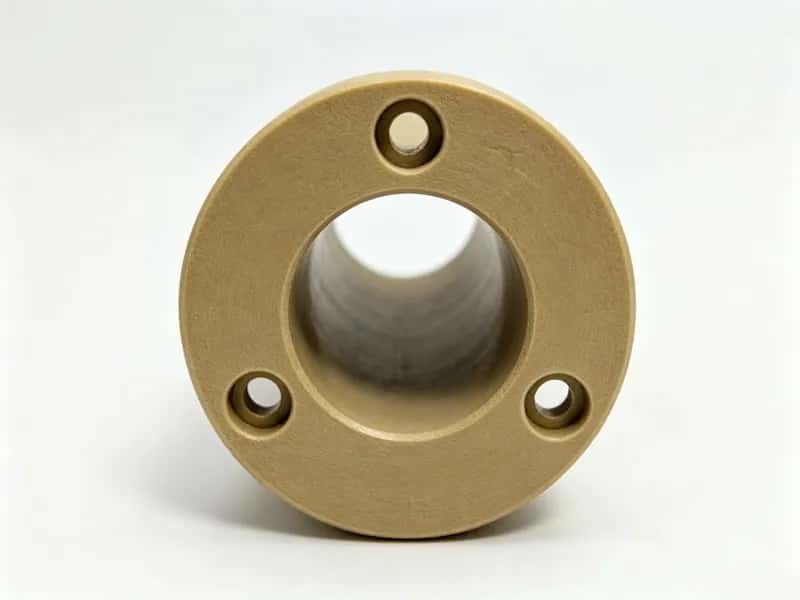
High-temperature wear and isolation for flanged sleeves, fixtures, and demanding bushings. Anneal only when agreed if residual stress is a risk.
| Material | Choose it when | Machining watch-outs | Typical tolerance posture | Environment to specify |
|---|---|---|---|---|
| POM / Acetal | Stiff wear guides, bushings, and fittings | Edge burrs; heat at high feed on thin walls | ±0.05 mm typical; tighter via DFM | Dry sliding; temperature within acetal limits |
| PTFE | Seals and seats that need low friction and chemical inertness | Clamp crush; dimensional spring; soft edges | Feature-dependent; confirmed via DFM | Chemical media; sealing pressure and temperature |
| PPS | Heat- and chemical-stable insulators or valve inserts | Filled grades abrasive to tools | ±0.05 mm typical on rigid stock (DFM) | Temperature and chemical exposure; filler percentage |
| PEEK | High-temp isolation and wear at bolted interfaces | Stress if overheated or overclamped | ±0.05 mm typical; tighter via DFM | Continuous temperature; electrical isolation needs |
| Nylon PA6 / PA66 | Impact and wear parts such as rollers and spacers | Moisture swell after machining | ±0.05 mm typical; humidity-aware DFM | Humidity, water exposure, and conditioning notes |
Polymers expand more than metals and hold cutting heat. Control: lower speeds, sharp tools, air or light coolant where the grade allows, and metrology after shop temperature returns.
Soft stock dents under hard jaws and springs back when released. Control: soft jaws, distributed pads, light clamp force, and supported fixtures on thin walls.
Some grades tear rather than shear. Control: sharp geometry, planned climb strategies where suitable, and dedicated deburr so assembly edges stay safe.
Nylon dimensions move with humidity; filled PPS and PEEK wear tools fast. Control: condition stock when needed, coated tooling on filled grades, and call out critical fits.
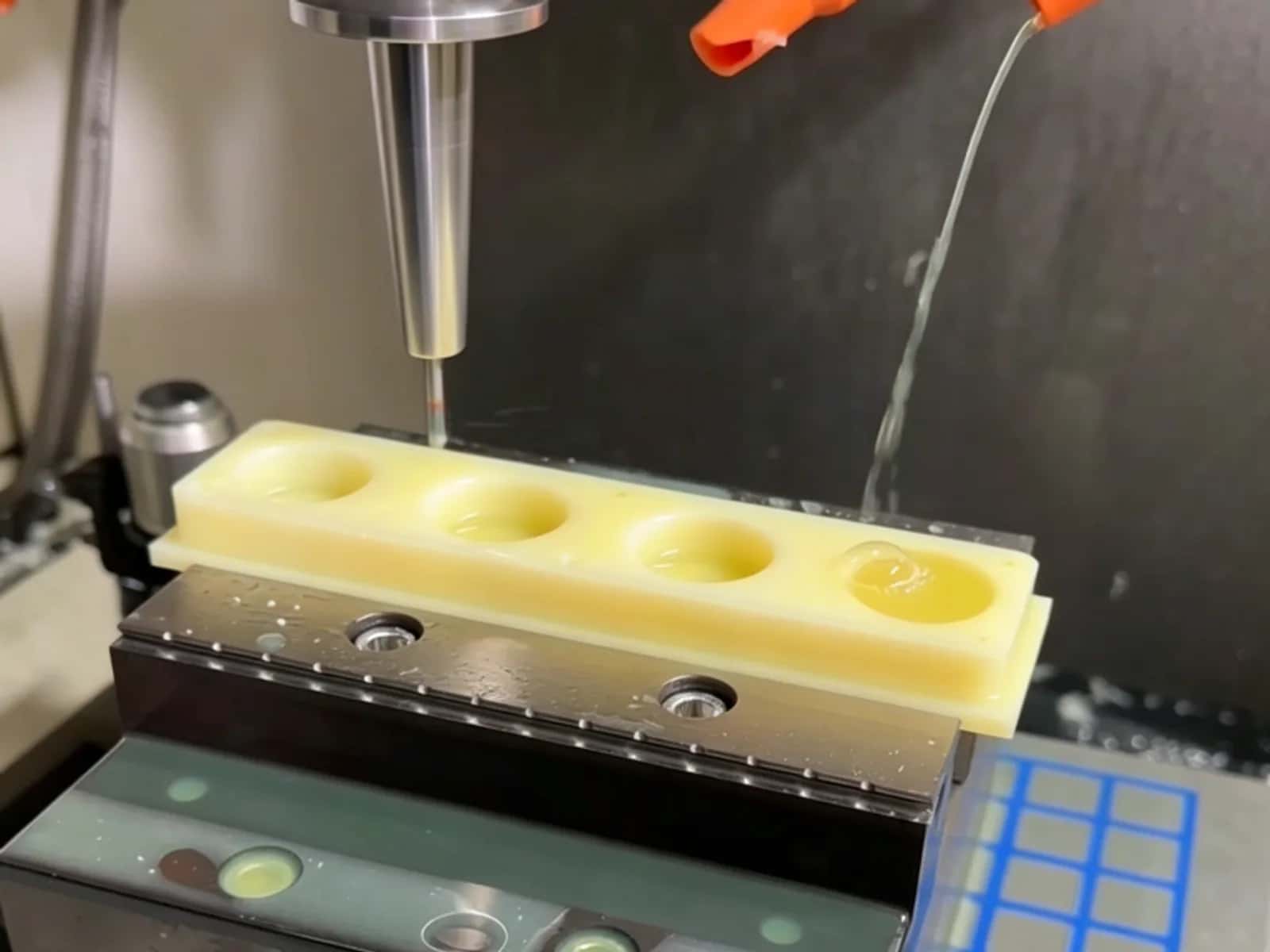
Pocket milling of a yellow engineering-plastic strip in a vise shows polymer chip behavior, coolant placement, and why metal parameters do not transfer. Clamp force and tool geometry are planned so the polymer does not crush or overheat before final size checks.
Plastic limits are not copied from metal pages. Typical precision plastic feature tolerance is about ±0.05 mm; selected critical dimensions can be tighter only when geometry, grade, and environment allow — confirmed via DFM. Nylon jobs may require humidity notes; PTFE crush and PEEK heat set different real limits than POM.
In-house CNC machining and agreed-scope pre-shipment inspection verify critical characteristics. "100% inspection" means the agreed characteristic scope, not CMM of every feature. FAI, MTR, CoC, and material traceability are available when agreed for the project. Final checks wait until parts stabilize thermally. See Precision & Tolerance Standards and Quality Control.
Controlled deburring, polishing where appropriate, cleaning, and stress-relief or annealing only when agreed are available or coordinated per project. Do not copy metal finishing language onto polymers. Coatings are grade-specific — confirm compatibility during DFM. Details: CNC surface finishes.
Send a package that lets engineering quote without guessing:
Upload CAD via Request a Quote. The Material field can be prefilled and remains editable.
Upload CAD for DFM review with engineering-plastic context prefilled. We typically respond within one business day when the package is complete.